Showing posts with label Hindu Festivals. Show all posts

Tuesday, November 17, 2015

KARTHIGAI DEEPAM- Hindu Festival


Today Karthigai Deepam festival is celebrated in Tamil Nadu and Andhra pradesh. The festival is very famous in Tiruvannamalai where the Deepam is lighted in the Arunachaleswarar temple and on the top of the Hill simultaneously around 6 pm on this day every year.

I give below a small write up on the festival:

Karthikai Deepam (Tamilகார்த்திகை தீபம்) or Karthikai vilakkidu (Tamil:கார்த்திகைத் விளக்கீடு) [ also known as Karthika Deepam (కార్తీక దీపం) in Telugu ] is a Hindu specially Hindu Tamils and Hindu Telugu festival. The festival is observed in every home and every temple, and falls in the month of Kārttikai (mid-November to mid-December) as per Tamil calendar. This occurs on the day when the moon is in conjunction with the constellation Karthigai (Pleiades) and purnimai. This constellation appears as a group of six stars in the firmament in the shape of a pendant from the ear.
Many legends and lyrical poetry have grown round this star. The six stars are considered in Indian mythology as the six celestial nymphs who reared the six babies in the saravana tank which later were joined together to form the six faced Muruga. He is therefore called Karthikeya, the one brought up by the Karthigai nymphs. Houses and streets are lit up with rows of oil lamps (Deepam) in the evening of the festival day.

Religious aspects:

Lord Shiva appeared as an endless flame of light before Lord Vishnu and Lord Brahma, who each considered himself supreme and said that the matter could be tested if the two could search for Lord Shiva's Head and feet. 

Lord Vishnu took the form of a boar(Sanskrit:Varaha, Tamil:Varahan)       and delved deep into the earth, Lord Brahma that of a swan(Sanskrit:Hamsa, Tamil:Annam) and flew towards the skies. Lord Vishnu failed in his search and returned. But Lord Brahma, chancing upon a piece of Thazhambu, a flower, learnt from it that it had been floating down for thirty thousand years from Lord Shiva's head. He seized upon this and claimed to Lord Shiva that he had seen the other's top. Lord Siva realized the falsehood and pronounced that there would never be a temple for Lord Brahma in this world. He also interdicted the use of the flower Thazhambu in his worship. Lord Shiva appeared as a flame, this day is called Maha Deepam.

Celebrations
Nilavilakku lit up for Karthigai Deepam
Rows of Agal vilakkus (oil lit lamps) are lit in every house. Karthigai is essentially a festival of lamps. The lighted lamp is considered an auspicious symbol. It is believed to ward off evil forces and usher in prosperity and joy. While the lighted lamp is important for all Hindu rituals and festivals, it is indispensable for Karthigai. 


This festival is also celebrated to commemorate the bonding between brothers and sisters in south India(analogous to Bhaiya-Dhuj and Raakhi). Sisters pray for the prosperity and success of their brothers and light lamps to mark the occasion.
In Telugu households, Kaartheeka maasam (month) is considered very auspicious. The Kartheeka month starts on the day of Deepawali. From that day till the end of the month, oil lamps are lit every day. On Kartheeka Pournami (full moon of Kartheeka month) oil lamp with 365 wicks, prepared at home, are lit in Lord Shiva temples. Apart from that, Kaartheeka puranam is read and fasting is observed till sunset, every day for the whole month.

Celebrations at Tiruvannamalai
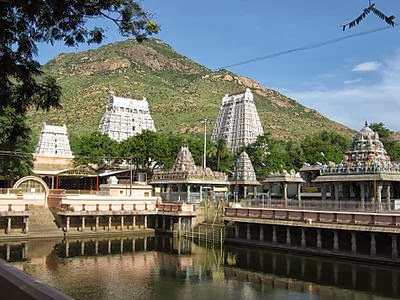

 
                   Arunachaleswarar temple and Hill in Tiruvannamalai


Karthigai festival in Tiruvannamalai hills is very famous. On Karthigai day, a huge fire lamp is lit up on the hill, visible for several kilometers around the hill. 

The fire (dheepam) is called Mahadeepam, as Hindu devotees visit the place, to pray and offer lord Shiva.


Read more ...

Wednesday, September 2, 2015

Hindu Festivals-Part I.. Ganesh Chadurthi

All festivals in Hinduism are predominantly religious in character and significance. Many festivals are seasonal. Some celebrate harvest and birth of God or Heroes. Some are dedicated to important event in Mythology. Many are dedicated to Ganesh, Shiva & Parvati, Vishnu & Lakshmi and Brahma & Saraswati

Details of the important Hindu festivals are given here in different Parts.


In Part I of the series the details of Ganesh Chadurthi are given as below

Ganesh Chadurthi (Vinayagar chadurthi, Pillayar /chadurthi)'


Ganesha Chaturthi (Devanagari: गणेश चतुर्थी, Kannada: ಗನೆಶ ಚತುರ್ಥೀ), also known as Vinayaka Chaturthi is the Hindu festival of Ganesha, the son of Shiva and Parvati, who is believed to bestow his presence on earth for all his devotees in the duration of this festival. It is the birthday of Ganesha who is widely worshipped as the god of wisdom, prosperity and good fortune.
The festival is observed in the Hindu calendar month of Bhaadrapada, starting on the shuklachaturthi (fourth day of the waxing moon period). The date usually falls between 20 August and 15 September. The festival lasts for 10 days, ending on Anant Chaturdashi (fourteenth day of the waxing moon period).
While celebrated all over India, it is most elaborate in western and southern India. Outside India, it is celebrated widely in Nepal and by Hindus in the United States, Canada and Fiji.
File:Lalbaughcha raja.jpg


Two to three months prior to Ganesh Chaturthi, artistic clay models of Lord Ganesha are made for sale by specially skilled artisans. They are beautifully decorated & depict Lord Ganesh in various poses. The size of these statues may vary from 3/4 of an inch to over 25 feet.
Ganesh Chaturthi starts with the installation of these Ganesh statues in colorfully decorated homes and specially erected temporary structures mandapas (pandals) in every locality. The pandals are erected by the people or a specific society or locality or group by collecting monetary contributions. The mandapas are decorated specially for the festival, either by using decorative items like flower garlands, lights, etc. or are theme based decorations, which depict religious themes or current events.
The priest, usually clad in red silk dhoti and shawl, then symbolically invokes life into the statue by chanting mantras. This ritual is the Pranapratishhtha. After this the ritual called as Shhodashopachara (16 ways of paying tribute) follows. Coconut, jaggery, 21 modakas, 21 durva (trefoil) blades of grass and red flowers are offered. The statue is anointed with red unguent, typically made of Kumkum & Sandalwood paste . Throughout the ceremony, Vedic hymns from the Rig Veda, the Ganapati Atharva Shirsha Upanishad, and the Ganesha stotra from the Narada Purana are chanted.

For 10 days, from Bhadrapad Shudh Chaturthi to the Ananta Chaturdashi, Ganesha is worshipped. On the 11th day, the statue is taken through the streets in a procession accompanied with dancing, singing, and fanfare to be immersed in a river or the sea symbolizing a ritual see-off of the Lord in his journey towards his abode in Kailash while taking away with him the misfortunes of his devotees, this is the ritual known as Ganesh Visarjan. At individual homes the Visarjan is also done on 3rd, 5th or 7th day as per the family tradition. All join in this final procession shouting "Ganapati Bappa Morya, Pudhachya Varshi Laukar ya" (O lord Ganesha, come again early next year). After the final offering of coconuts, flowers and camphor is made, people carry the idols to the river to immerse it.
The main sweet dish during the festival is the modak (modagam or modakam in South India). A modak is a dumpling made from rice flour/wheat flour with a stuffing of fresh or dry-grated coconut, jaggery, dry fruits and some other condiments. It is either steam-cooked or fried. Another popular sweet dish is the karanji (karjikaiinKannada) which is similar to the modak in composition and taste but has a semicircular shape.
Public celebrations of the festival are hugely popular, with local communities (mandalas) vying with each other to put up the biggest statue & the best pandal. The festival is also the time for cultural activities like singing and theater performances, orchestra and community activities like free medical checkup, blood donation camps, charity for the poor, etc.
Today, the Ganesh Festival is not only a popular festival, it has become a very critical and important economic activity for Maharashtra. Many artists, industries, and businesses survive on this mega-event. Ganesh Festival also provides a stage for budding artists to present their art to the public. The same holds true for Hyderabad and Chennai too. In Maharashtra, not only Hindus but many other religions also participate in the celibration of Ganesha festival like Muslims, Jains, Christian and others. This festival has managed to re-establish the unity among the Indians during British Era.
Source:http://en.wikipedia.org/wiki/Ganesh_Chaturthi


                                                        WORSHIP OF GANESH


                                                Immersion of Ganesh Idols

Read more ...

Friday, August 28, 2015

Hindu Festivals -Part IV Onam(Thiru Onam)


Onam (Malayalamഓണം) is a Hindu festival and the state festival of Kerala celebrated by the people of KeralaIndia. 

The festival commemorates the Vamanaavatar of Vishnu and the subsequent homecoming of the legendary Emperor Mahabali. It falls during the month of Chingam (August–September) and lasts for ten days. 

Mahabali's rule is considered the golden era of Kerala.
The following song (in Malayalam Language) is often sung over Onam:
Maveli nadu vaneedum kalam,
manusharellarum onnupole
amodhathode vasikkum kalam
apathangarkkumottillathanum
kallavum illa chathiyumilla
ellolamilla polivachanam
kallapparayum cherunazhiyum
kallatharangal mattonnumilla
adhikal vyadhikalonnumilla
balamaranangal kelppanilla
...(Translation)
When Maveli ruled the land,
All the people were equal.
And people were joyful and merry;
They were all free from harm.
There was neither anxiety nor sickness,
Deaths of children were unheard of,
There were no lies,
There was neither theft nor deceit,
And no one was false in speech either.
Measures and weights were right;
No one cheated or wronged his neighbor.
When Maveli ruled the land,
All the people formed one casteless races

(Source: http://en.wikipedia.org/wiki/Onam)


The festival is marked by various festivities, including intricate flower carpets, elaborate banquet lunches, snake boat races, Onappottan, Kaazhchakkula in Guruvayoor, Puli Kali, Kaikottikkali etc. These festivities make Onam a unique festival on the earth which is embellished by most number of cultural elements and it can be undoubtedly said that these elements constitute the colorfulness, diversity and richness that no other festival can claim.

The Customs of Onam Festival  

a) Pookalam


Pookalam
A flower carpet called 'Pookalam' is laid in front of every house to welcome the advent of the vanquished king, and earthen mounds representing Mahabali and Vishnu are placed in the dung-plastered courtyards. 

Traditional rituals are performed followed by a lavish feast called 'Sadhya'. Onam also means new clothes for the whole family, sumptuous home-cooked delicacies on plantain leaf and the lingering aroma of the sweet Payasam.
Onam Feast

 b) Kaikottikali 


Onam is in the air.Its time to revive our rich folk arts when women come out with their dances, especially kaikottikalli.This is the period from "atham" to Onam when the Malayali celebrates a bumper harvest and is in a festive mood.  
The women-folk neatly decked up in mundu-veshti and ornamental flowers in their hair decorate their frontyard and "nadumittam" with flowers and light a lamp near an idol of Ganapathy in a gesture to overcome all hurdles in their pah to prosperity. 


Nadumittam
 
The simple rythmic group dance which involves clapping each other's palms while encircling the pookalam is what's known as kaikottikali, the essence of Onam. 


Kaikottikali
 
Women, young and old, take part in the folk dance which signifies joy, happines and festivity. Though kaikottikali is neither a ritual form of dance or stage art, it derives its "ragachaya" from kathakali and the songs are based on episodes and legends like Krishnaleela, Shakunthalam, Kuchelavritham and Dhruvacharithram. Emphasis is given on rythmic movements than on mudra.The uniqueness of kaikottikali lies in the fact that the songs are sung by the participants themselves and the dance involves just simple steps in unison. 
 
The most common ragams found in the kaikottikali songs include the Hussaini, Bhairavi and Kamboji and on several occasions the song deviate from puranic tales to folk stories. 
 
Songs are also sung in praise of Saraswati, Ganapathy and Krishna which is considered to be very auspicious. Sadya over, on Onam day, women dance away to glory till the euphoria wanes. 
 

c.)The Spectacle 
 
Spectacular parades of caparisoned elephants, fireworks and the famous Kathakali dance are traditionally associated with Onam.


Parade of Caparisoned Elephants 


Kathakali dance
It's also the season of many cultural and sport events and carnivals. All this makes Onam-time a perfect period to visit this coastal state, touted as "Gods Own Country". No wonder the Government of Kerala has declared this time every year as Tourism Week. 
 
d) The Grand Boat Race
 
 
One of the main attractions of Onam, is the 'Vallamkali' or boat races of Karuvatta, Payippad, Aranmula and Kottayam. Hundreds of oarsmen row traditional boats to the rhythm of drums and cymbals. These long graceful Snake Boats called 'Chundans' are named after their exceedingly long hulls and high sterns that resemble the raised hood of a cobra.

  
Boat Race
 
Then there are 'Odis', the small and swift raiding crafts adorned with gold tasseled silk umbrellas, the 'Churulans' with their elaborately curled prows and sterns, and the 'Veppus', a kind of cook-boat. This traditional village rivalry on watercrafts reminds one of ancient naval warfare.  

Thousands throng the banks to cheer and watch the breathtaking show of muscle power, rowing skills and rapid rhythm. These boats - all pitted against their own kind - rip through the backwaters of Kerala in a tussle of speed.  
 
Onam is for All 


Although this festival has its origin in Hindu mythology, Onam is for all people of all class and creed. Hindus, Muslims and Christians, the wealthy and the downtrodden, all celebrate Onam with equal fervor. The secular character of Onam is peculiar to this land where unity had always coexisted with diversity, especially during festivals, when people come together to celebrate life's unlimited joys. 


Read more ...